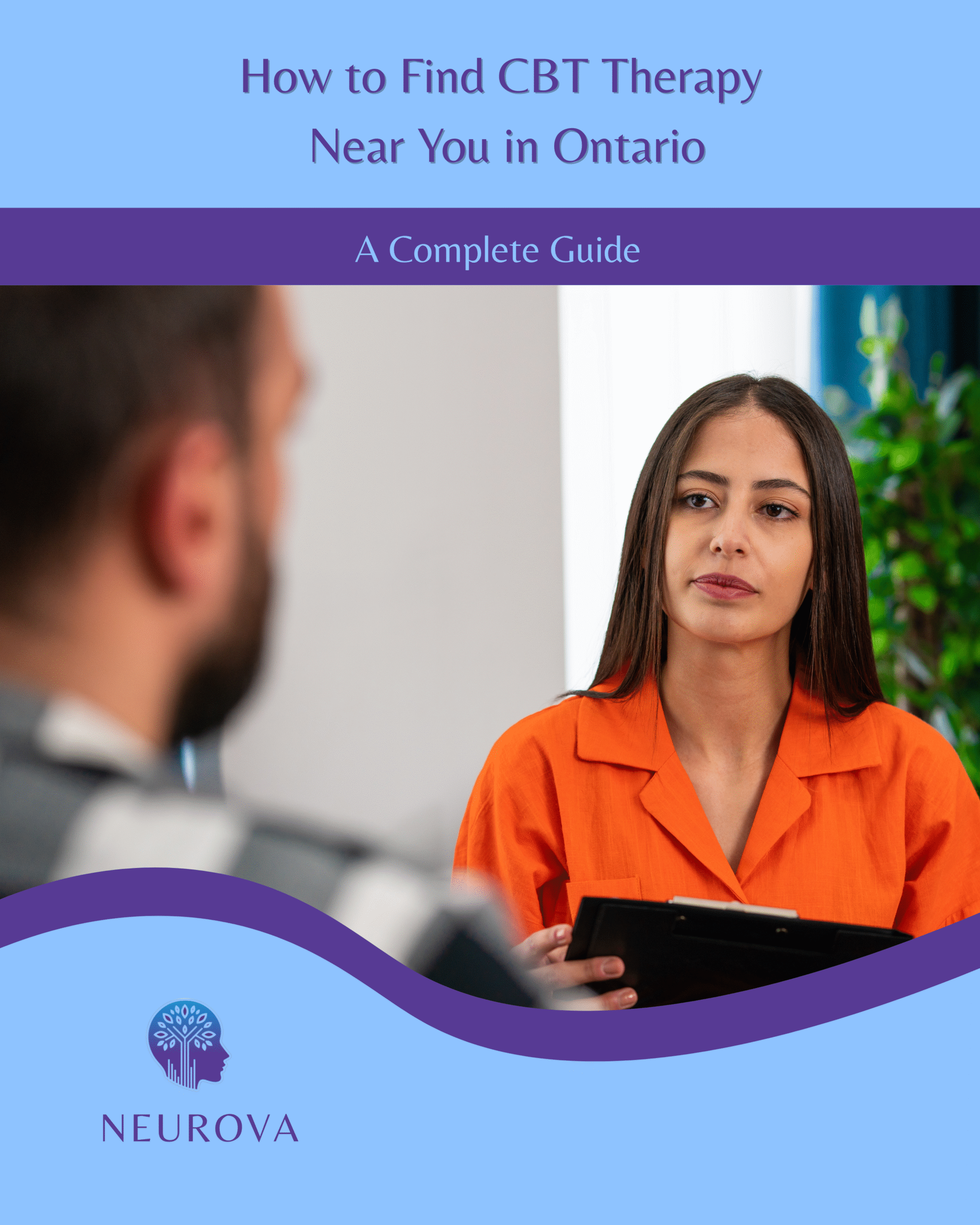
Cognitive Behavioural Therapy (CBT) has become one of the most recommended approaches for treating a wide range of mental health challenges in Ontario. Known for its structured, goal-oriented style, CBT focuses on identifying and changing unhelpful thought patterns and behaviours that can contribute to issues like anxiety, depression, stress, phobias, and even insomnia. Unlike some therapy methods that take an open-ended approach, CBT is typically short-term, making it a good option for people looking for practical results in a matter of weeks or months.
This guide will help you understand how CBT works, what to look for in a therapist, and the steps you can take to find someone near you—so you can begin your journey toward better mental health with confidence and clarity.
What Is CBT and How Does It Work?
CBT is a type of talk therapy that helps people understand how their thoughts, emotions, and behaviours are interconnected. The core idea is simple: when you change the way you think, you can change how you feel and act. Sessions usually involve learning to recognize unhelpful thought patterns, challenging them with evidence, and replacing them with more balanced, constructive ways of thinking.
A CBT therapist will guide you through exercises that may include journaling, role-playing, or practicing new coping skills between sessions. Over time, this process can help you break cycles of negative thinking and improve emotional resilience.
Unlike some forms of therapy that explore your past extensively, CBT focuses on the present and what you can do now to improve your situation. That doesn’t mean your history is ignored—it’s simply not the central focus. This present-focused approach is one reason CBT is so effective for people who want actionable strategies they can apply in their daily lives right away.
Common Issues CBT Can Help With
One of the reasons CBT is so popular in Ontario is its versatility. It can be applied to a broad range of mental health challenges, making it a go-to recommendation from family doctors, psychiatrists, and mental health organizations.
CBT is especially effective for:
- Anxiety disorders – Including generalized anxiety disorder (GAD), panic attacks, phobias, and social anxiety.
- Depression – Helping to shift persistent negative thinking patterns that fuel low mood.
- Stress management – Providing tools to navigate high-pressure situations at work, school, or home.
- Obsessive-compulsive disorder (OCD) – Reducing intrusive thoughts and repetitive behaviours.
- Post-traumatic stress disorder (PTSD) – Teaching coping skills and reframing traumatic memories.
- Insomnia – Supporting better sleep habits through CBT-I (insomnia-focused CBT).
Whether you’re a university student in Toronto struggling with exam anxiety, a parent in Ottawa facing burnout, or someone in rural Ontario managing chronic stress, CBT offers adaptable strategies that can fit your unique situation.
The Benefits of Choosing CBT Over Other Therapies
While many therapy types are beneficial, CBT’s evidence base and structure make it a standout option. Research consistently shows that CBT is effective in treating common mental health concerns, often in fewer sessions than other approaches. This means you may see results faster, which can be motivating for people hesitant to start therapy.
CBT is also highly practical. Instead of just talking about problems, you work with your therapist to develop skills you can use outside of sessions—like reframing unhelpful thoughts, managing stress triggers, or practicing relaxation techniques. These skills can have a long-term impact on your mental well-being, even after therapy ends.
In Ontario, CBT’s adaptability makes it accessible to diverse populations. Therapists can tailor the approach for different ages, cultural backgrounds, and even delivery formats—whether in-person, online, or through group sessions. The fact that CBT can be done virtually with equal effectiveness has also made it more popular in recent years, especially in regions with fewer in-person therapy options.
How to Search for a CBT Therapist in Ontario
Finding the right CBT therapist starts with knowing where to look. In Ontario, you have several options:
- Professional directories – Websites like Psychology Today, Ontario Association of Mental Health Professionals (OAMHP), and Canadian Counselling and Psychotherapy Association (CCPA) allow you to filter by “CBT” and location.
- Referrals from your doctor – Many family physicians maintain lists of local therapists they trust.
- Community mental health centres – These often have CBT-trained therapists on staff.
- Employee Assistance Programs (EAPs) – Check if your workplace benefits include access to CBT sessions.
When browsing profiles, pay attention to a therapist’s credentials, years of experience, and specializations. Some CBT therapists may focus more on anxiety, others on trauma, so finding a match for your needs is important.
Factors to Consider When Choosing a Therapist
The effectiveness of CBT depends not just on the method but on the relationship between you and your therapist. Here are key factors to consider:
- Credentials – In Ontario, look for Registered Psychotherapists (RP), Registered Social Workers (RSW), or Psychologists with CBT training.
- Experience – Ask how long they’ve been practicing CBT and with which populations.
- Approach – Some therapists blend CBT with other techniques, such as mindfulness or dialectical behaviour therapy (DBT).
- Availability – Make sure their schedule matches yours and that they can offer sessions at a frequency you can commit to.
- Location or format – Decide if you prefer in-person sessions close to home or the flexibility of online therapy.
Ultimately, the “right” CBT therapist is someone you feel comfortable opening up to and whose methods make sense to you.
Costs and Insurance Coverage for CBT in Ontario
The cost of CBT therapy in Ontario can vary widely depending on the therapist’s qualifications, location, and whether sessions are in-person or online. Private sessions with a Registered Psychotherapist (RP) or Registered Social Worker (RSW) typically range from $120 to $200 per hour, while psychologists may charge more. In urban centres like Toronto, fees can be at the higher end of that spectrum, while smaller towns may have lower rates.
OHIP (Ontario Health Insurance Plan) does not usually cover CBT unless it’s provided by a psychiatrist or through a hospital program. However, many people access coverage through extended health insurance plans from employers or personal insurance policies. Some plans cover a set number of sessions or a maximum annual amount, so it’s worth reviewing your benefits in detail.
For those without insurance, community mental health centres, non-profits, and certain university clinics offer low-cost or sliding-scale CBT sessions. Online therapy platforms can also be more affordable while still connecting you with qualified Ontario-based therapists. Knowing your budget and exploring coverage options in advance can make CBT more accessible and reduce financial stress.
How Online CBT Expands Access in Ontario
Online CBT has transformed how Ontarians access therapy. Whether you live in downtown Toronto or a remote Northern Ontario community, virtual sessions bring trained CBT therapists to your home via secure video calls. This eliminates travel time, offers greater scheduling flexibility, and allows you to choose from a wider pool of specialists—not just those within commuting distance.
Many clients report that online CBT feels just as personal and effective as in-person sessions. Therapists can still share worksheets, guide you through exercises, and check in on progress between appointments. Platforms like Zoom for Healthcare and JaneApp ensure sessions remain private and compliant with Canadian health privacy laws.
Online CBT can be especially valuable for people with mobility challenges, busy work schedules, or anxiety about leaving home. It also opens opportunities to match with a therapist who specializes in your exact concern, even if they’re located across the province. As long as your therapist is licensed in Ontario, you can legally work with them from anywhere in the province.
What to Expect in Your First CBT Session
Walking into your first CBT session—whether in person or online—can feel intimidating, but knowing what to expect can ease those nerves. Your therapist will typically begin by discussing your main concerns, goals, and any symptoms you’re experiencing. They may ask about your personal history, daily routines, and current stressors to get a full picture of your situation.
You’ll also learn more about how CBT works, including the focus on identifying unhelpful thought patterns and practicing skills between sessions. The therapist may introduce simple exercises right away or assign “homework” like tracking your mood or noting situations that trigger certain thoughts.
Your first session is also a chance to evaluate whether the therapist feels like a good fit. If something doesn’t feel right, it’s okay to explore other options—finding the right connection is key to progress.
By the end of the session, you should leave with a clearer sense of the process, an initial action plan, and confidence that you’re working toward achievable goals.
Tips for Getting the Most Out of CBT
CBT works best when you actively participate, both during and between sessions. Here are a few ways to maximize results:
- Be open and honest – The more your therapist understands your thoughts and behaviours, the better they can help.
- Do the homework – Completing exercises outside of sessions reinforces new skills and accelerates progress.
- Track your progress – Keep notes on changes in your thoughts, mood, or reactions to situations.
- Practice patience – CBT is structured but still takes time; small improvements build over weeks or months.
- Ask questions – If you don’t understand a technique, ask for clarification so you can apply it effectively.
Consistency is key. Whether you’re attending weekly or biweekly sessions, regular engagement ensures that the skills you’re learning become natural parts of your daily life.
FAQ – Finding a CBT Therapist in Ontario
1. Is CBT covered by OHIP?
Only if it’s provided by a psychiatrist or through a hospital-based program. Otherwise, you’ll need private insurance or pay out of pocket.
2. How long does CBT usually last?
Most programs run for 8–20 sessions, but duration depends on your needs and goals.
3. Can I get CBT for free in Ontario?
Yes—some community centres, university clinics, and non-profits offer no-cost or sliding-scale CBT.
4. Is online CBT as effective as in-person?
Yes. Research shows online CBT can be equally effective for many conditions.
5. How do I know if a therapist is qualified?
Look for designations like RP, RSW, or Psychologist, and check if they’re registered with the appropriate Ontario regulatory body.
6. What’s the difference between CBT and regular talk therapy?
CBT is structured, goal-oriented, and skills-based, while general talk therapy may be more open-ended.
7. Will my employer’s health plan cover CBT?
Many do—check your policy for coverage under “psychotherapy,” “psychology,” or “social work.”
8. Can CBT help with physical health problems?
Yes—it can help manage chronic pain, insomnia, and stress-related physical symptoms.
9. Do I need a referral for CBT?
Not for private sessions, but you may need one for OHIP-covered hospital programs.
10. How soon can I expect results?
Some people notice improvements within a few weeks, but lasting change usually takes consistent effort over months.
Conclusion
CBT is one of Ontario’s most trusted and effective mental health treatments, offering practical tools for addressing everything from anxiety and depression to sleep problems and chronic stress. By understanding what CBT involves, how to choose the right therapist, and where to find affordable or covered options, you can take an important step toward improving your well-being.
Looking for an Ontario Therapist well-versed in CBT? If you’re ready to start your search, explore verified, Ontario-based professionals at neurova.ca/therapy. Your journey to better mental health can begin today.