Feeling lost lately? You’re not alone.
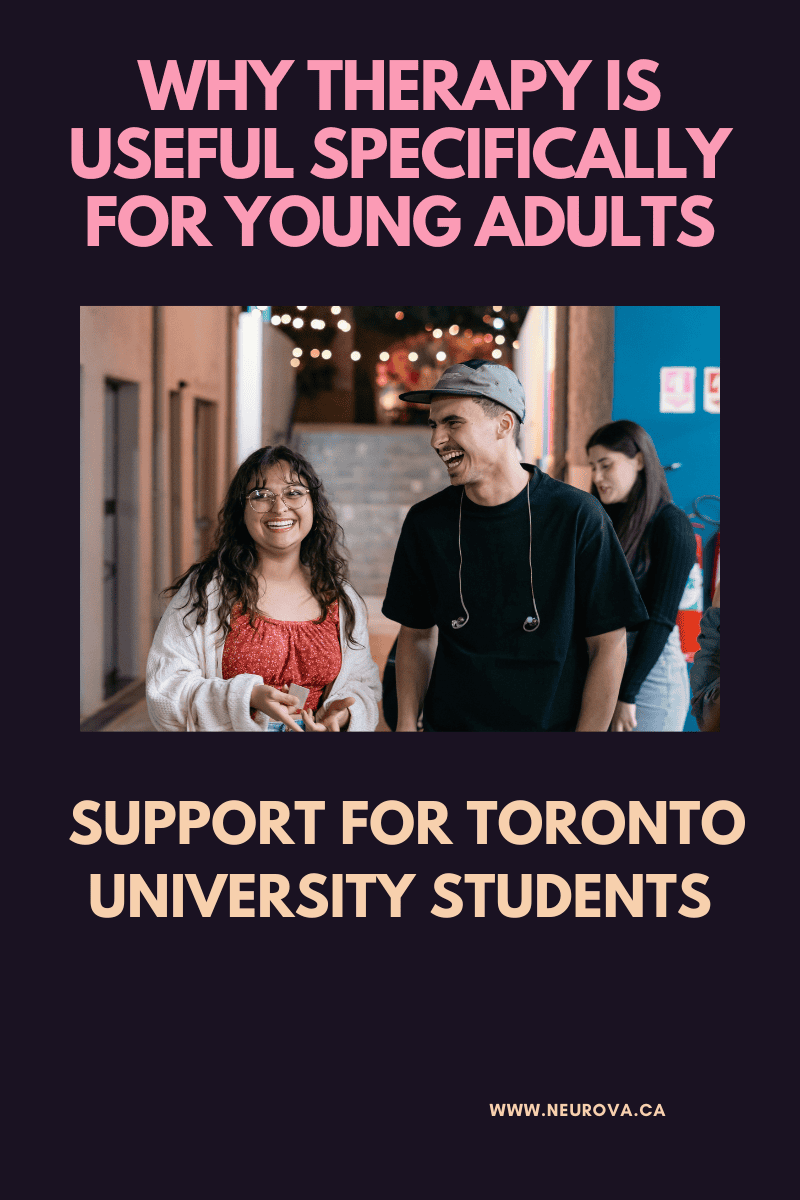
Whether you’re fresh out of high school, halfway through your undergrad, or approaching graduation with zero clue what’s next—this stage of life is hard. No one really teaches you how to navigate the messy middle between being a teenager and becoming a full-fledged adult. That’s why therapy is useful specifically for young adults—especially if you’re juggling classes at UTM, worrying about rent downtown near UofT, or trying not to burn out during midterms at TMU or York.
Why does this matter now?
Young adulthood is full of big firsts:
First time living away from home.
First heartbreak that actually hurts.
First panic attack during exams, wondering if this major even makes sense for you.
It’s a time when your brain is still developing, your identity is shifting, and your values are taking shape. You’re building the foundation for the rest of your life—without a manual. Therapy gives you a space to sort through all that, with someone trained to actually listen, support, and help you grow.
🚪 You’re not just stressed. You’re transitioning.
Leaving home isn’t just about packing bags—it’s about letting go of your childhood self and stepping into something totally unfamiliar. For most students at UofT or York, that shift is overwhelming.
You’re:
Adjusting to new roommates, loud dorms, or isolated off-campus housing
Navigating homesickness, independence, and responsibilities all at once
Trying to balance grades, work, friends, dating, and maybe even family pressure
Therapy helps you regulate the chaos. It’s not about fixing you—it’s about helping you understand you.
🧭 Therapy helps you figure out who you are
You’re not supposed to have it all figured out at 20.
This is when questions like:
What do I actually believe in?
What kind of life do I want?
Am I making these choices for me or for someone else?
…start showing up.
Therapy gives you a space to ask these questions without judgment. You’re not rushed. You’re not graded. You’re just guided.

🛠️ Tools you won’t get from a textbook
Think of therapy like a skill-building class—but for your mental health.
You’ll learn:
How to identify and challenge the voice in your head that says “I’m not good enough”
How to communicate what you need in relationships and friendships
How to emotionally regulate during moments of stress, confusion, or crisis
How to set boundaries with people—even the ones you love
These are the kinds of tools that actually improve your quality of life long-term. No midterm required.
🧠 You’re not “too young” to go to therapy
This idea that therapy is for people who are “really struggling” or “older” is outdated.
Young adults are actually in the most critical window to benefit from therapy. Your brain is still flexible. Your habits are still forming. You’re still open to new ways of thinking. It’s the perfect time to reflect, reset, and realign.
In fact, research shows that early intervention leads to better long-term mental health outcomes. Waiting until everything falls apart? That’s the old way.
🏫 “But I’m already busy with school”
Fair. Between 8 a.m. labs at UTM, back-to-back lectures at TMU, or a 45-minute commute to UofT St. George, it feelslike there’s no time.
But here’s what students find out:
When your mental health improves, your time actually expands.
You’re more focused. You procrastinate less. You’re more in control. You bounce back faster from setbacks. Therapy is not a time-waster—it’s a time-saver.
FAQ: Your Therapy Questions Answered
Why would I see a therapist if I’m not in crisis?
Because therapy isn’t just for crisis—it’s for clarity. You don’t have to be falling apart to benefit. If you’re confused, overwhelmed, or just trying to understand yourself better, therapy can help.
What benefits will I see?
You’ll gain more self-awareness, better emotional regulation, improved relationships, and healthier habits. You’ll start understanding why you react the way you do—and how to shift it.
How long until I start feeling better?
Some people feel relief after just one session. Others notice gradual changes over weeks. It’s not instant, but it’s real. Most students report noticeable improvements within 4 to 6 sessions.
You don’t have to do it alone.
Neurova offers free, no-waitlist therapy for university students across Toronto—including those at UTM, York, UofT, TMU, and OCAD. Our therapists understand the challenges that come with being a student today—because we’ve been there.
You deserve support that meets you where you’re at.
You don’t have to figure everything out solo.
Let’s talk. It’s free. It’s real. It might just change your life.