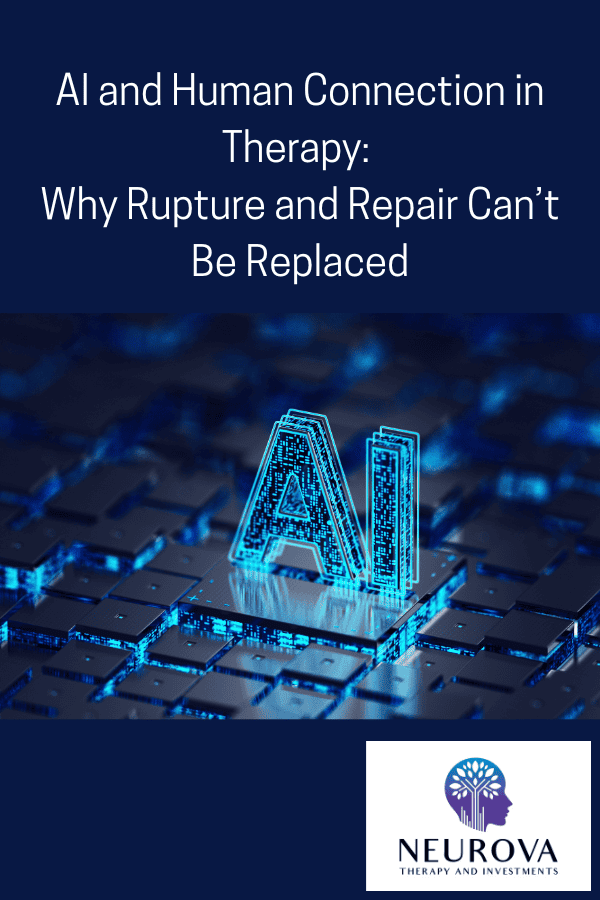
With AI tools becoming more common in mental health, it’s easy to wonder:
Can an app really replace a therapist? Can a chatbot support you through anxiety, depression, or trauma?
If you’re looking for Toronto free therapy, especially long-term support like UofT therapy services, here’s what you need to know:
AI can help—but it cannot do the most important thing therapy offers:
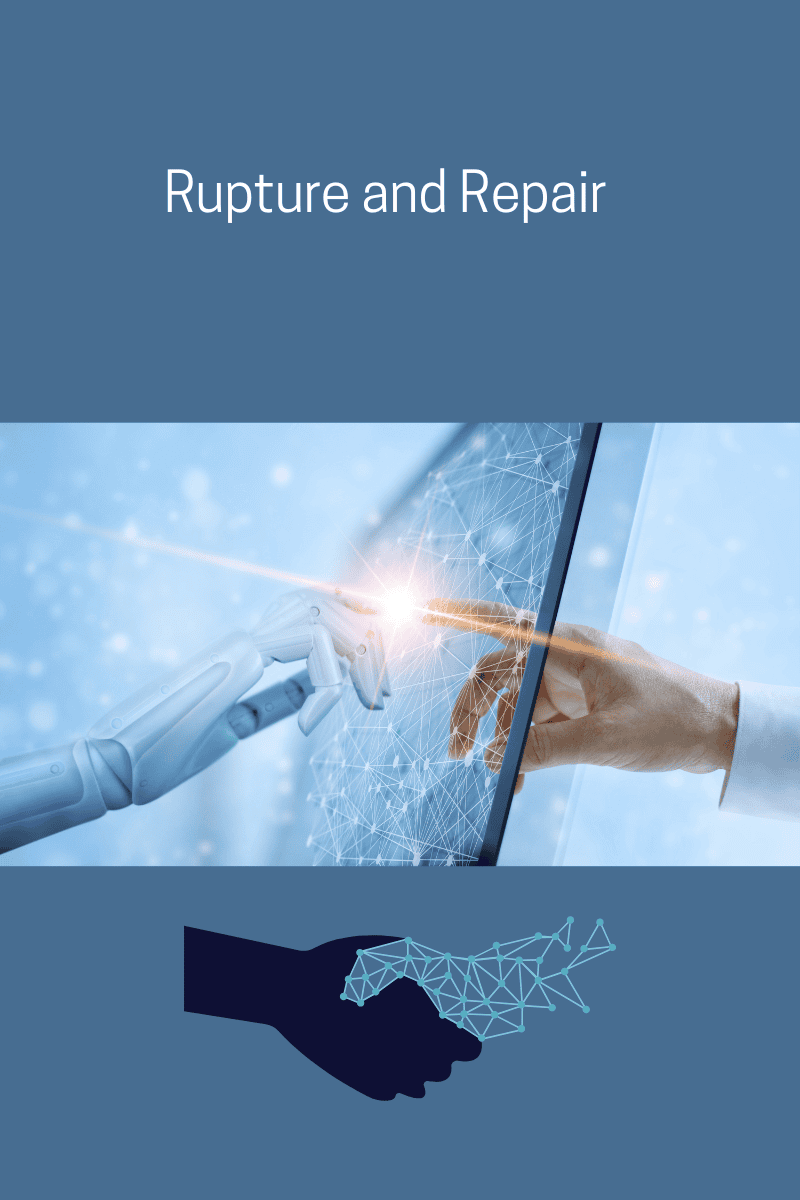
Rupture and repair.
What Is Rupture and Repair—And Why Is It So Healing?
Imagine this:
You’re in therapy, finally opening up about something personal.
Your therapist responds—but it doesn’t land. You feel unseen. Maybe even hurt.
That’s a rupture: a break in connection. A moment of disconnection or emotional misattunement.
But here’s where the magic happens:
A good therapist doesn’t ignore this.
They name it, explore it, and work through it with you.
That’s the repair—a deliberate effort to restore trust and connection.
And when rupture and repair happens repeatedly in a safe environment like therapy, it teaches your brain a new pattern:
💡 “Connection can survive tension. I don’t need to shut down, lash out, or disappear.”
What It Teaches You (That AI Can’t)
Most of us didn’t grow up with this kind of repair.
We experienced:
Avoidance
Silent treatment
Explosions
Ghosting
Blame games
So our brains learned: Conflict = danger. Disconnection = abandonment.
But in therapy, rupture and repair shows you something totally different.
You get to feel what it’s like to stay, work through it, and reconnect.
This process builds what’s called the therapeutic alliance—a trust-based, healing relationship that forms the foundation of effective therapy.
It’s not just talk. It’s emotional reconditioning.
How This Literally Changes Your Brain (Neuroplasticity 101)
Your brain is constantly updating based on lived experiences.
Through repetition, the neurons that fire together start to wire together—this is neuroplasticity.
Every time you go through rupture and repair in therapy:
Your brain updates its “relationship rules”
Your nervous system learns how to co-regulate with another person
Your body learns safety after emotional activation
You stop expecting every disagreement to turn into rejection
Over time, these emotional corrections restructure your internal blueprint for relationships.
You begin to embody healthy connection—without even trying.
This isn’t something AI can offer. AI can mimic words, but it can’t sit in silence with you.
It can’t feel your shame and still stay.
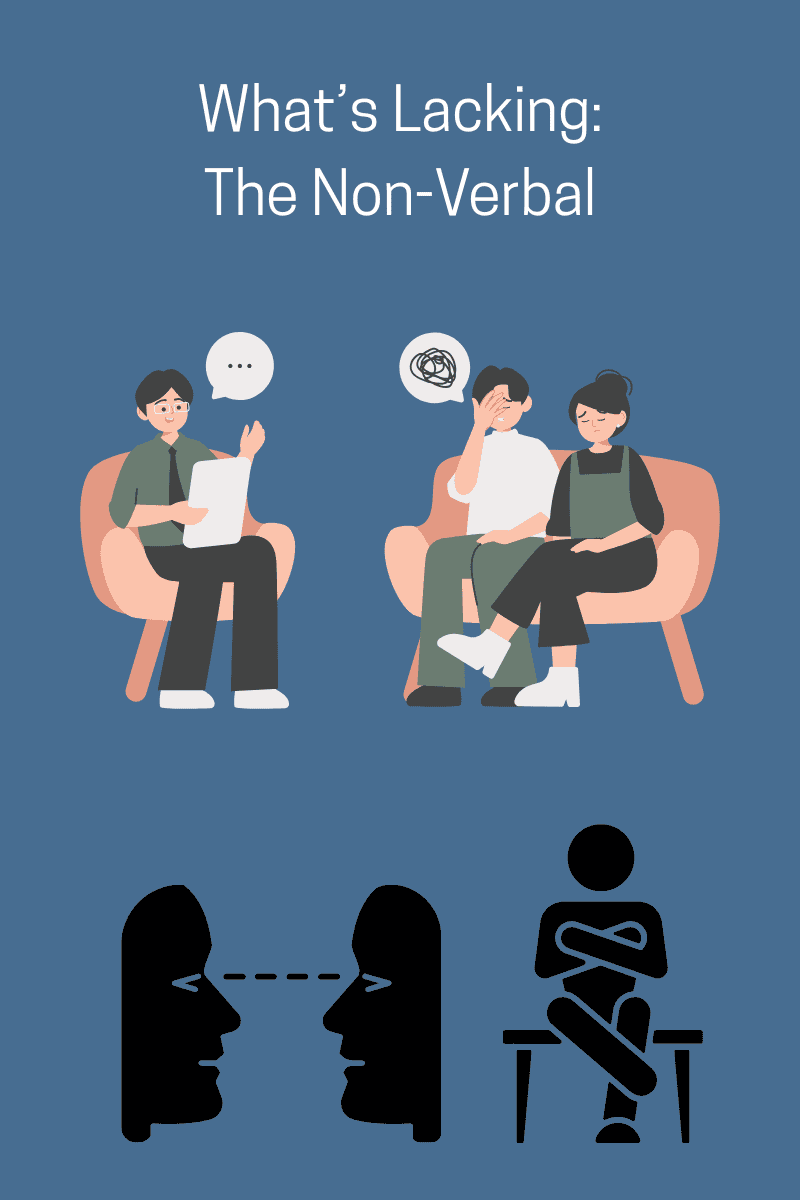
It can’t attune to your tears, your micro-expressions, or the shift in your breathing.
And it definitely can’t repair a rupture. Because to repair something, you have to actually feel it.
Why AI Still Has a Place—But Not as a Replacement
Let’s be clear: AI is an amazing supplemental tool.
It can:
Guide self-reflection
Help you practice CBT exercises
Be there at 2 a.m. when no one else is
Some studies even show AI chatbots are helpful at reducing anxiety and depressive symptoms in the short term
But… it’s not therapy.
It doesn’t build an emotional bond.
It doesn’t create space for long-term transformation.
It doesn’t help you heal your relationship patterns through co-regulation and trust.
And for university students—especially at UofT, TMU, OCAD, or anywhere in the GTA—this distinction matters.
Because what you need isn’t just symptom relief.
You need relational healing. You need to rewire. You need human-to-human repair.
FAQ: AI in Therapy vs. Real Therapy
Can AI be helpful in therapy?
Yes—but only as an add-on. It’s best used to support between sessions, track mood, or guide journal prompts.
Is it better than a human therapist?
No. AI doesn’t feel, notice, or respond with real-time nuance. It can’t hold space, reflect your energy, or form a relational bond.
So is AI dangerous in therapy?
Not necessarily. But relying on AI instead of real therapy can stunt emotional development. It may reinforce avoidance, or limit your capacity to build real-life trust.
What You Really Need Is Safe, Human Therapy
If you’re a student navigating academic pressure, relationship drama, identity questions, or anxiety about your future—what you need isn’t just “mental health advice.”
You need a real person who:
Can hold space for your pain
Will notice when something feels off
Won’t leave when things get messy
Will model healthy conflict and connection
That’s what Neurova offers.
Free, Long-Term, No-Waitlist Therapy for Students in Toronto
Neurova is proud to offer free therapy for Toronto students, covered by your university insurance.
✅ No waitlist
✅ Weekly, long-term sessions
✅ Therapists who understand AI, mental health, and career stress
✅ Available to UofT, TMU, OCAD, and all Ontario university students
If you’re looking for something deeper than a bot, we’re here.